
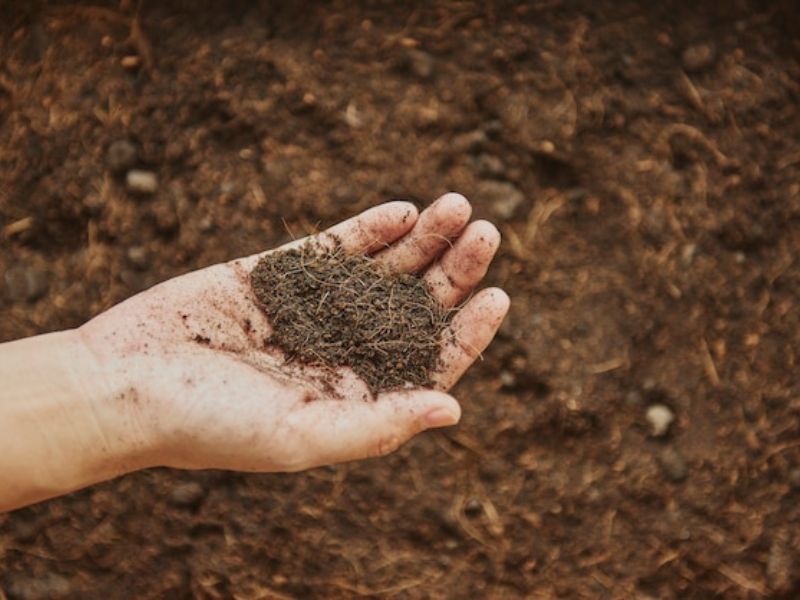
Scientists use advanced ICP spectral analysis to forecast soil nutrition with high precision, paving the way for smarter fertilizer use and greener farming.
Tokyo, Japan, 27 November 2025 – The future of soil testing may be arriving sooner than expected. A new international study led by Nakamura and a team of global researchers has revealed a promising method that could transform how farmers understand their soil, manage fertilizer use, and protect the environment. By using deep-learning technology combined with Inductively Coupled Plasma (ICP) spectral data, the researchers achieved highly accurate predictions of key soil properties, offering a faster, more affordable alternative to traditional lab-based soil diagnosis methods.
Conventional soil testing is often slow, technical, and costly, making it inaccessible for many farmers, especially in developing regions. As a result, misapplication of fertilizers leads to nutrient imbalance, financial loss, and environmental harm. The new approach could change that.
What the Researchers Did
The team analyzed 1,941 soil samples from seven countries, representing a wide variety of climates, soil types, cropping systems, and agricultural practices. Using the full ICP wavelength spectral data of ammonium acetate (NH₄OAc) soil extracts, they trained a deep-learning model to predict an extensive list of soil properties, including:
What They Found
The results were impressive. The model’s predictions matched laboratory measurements with R² values over 0.9 across most parameters, indicating extremely strong accuracy. Even the lowest prediction values remained reliably high.
This marks the first known study to successfully use the entire ICP spectral range to predict multiple soil properties at something previously thought too complex due to the high-dimensional data.
Why This Matters for Agriculture
If further developed, this approach could revolutionize soil testing by making it:
Better soil diagnosis means smarter fertilizer application, cutting waste, protecting waterways, and helping farmers improve yields.
This is especially important for developing countries, where testing costs often prevent widespread soil monitoring. With more training data and improved AI models, this method could empower millions of farmers with reliable nutrient insights for the first time.
Despite the strong results, researchers caution that more work is needed.
The model used a limited sample size, and expanding the dataset could sharply improve accuracy.
Future studies may incorporate CCD-based ICP units and convolutional neural networks (CNNs) for deeper spectral pattern recognition.
The team also plans to evaluate other soil extractants to determine whether different chemical solutions could improve prediction performance.
Broader Applications Beyond Farming
The researchers see potential far beyond soil nutrients. With further refinement, ICP-based AI predictions might help estimate:
This opens opportunities for environmental monitoring, public health, and industrial applications.
Barriers That Must Be Overcome
For widespread adoption, major limitations must be addressed:
Reducing equipment costs and improving accessibility will be key to bringing this technology to farmers worldwide.
This study represents a major step toward faster, cheaper, and more environmentally responsible soil testing. With additional research and expanded datasets, deep-learning models powered by ICP spectral data could help transform global agriculture, making it smarter, more efficient, and more sustainable.

Latest News



Agricult Outlook is a premier destination for navigating the future of agriculture through ground-breaking technological advancements. As the agricultural landscape undergoes a profound transformation, our magazine serves as a compass, guiding you through the realms of innovation and cutting-edge solutions.
We respect your privacy. The email address you provide will be used solely for subscription purposes and will not be stored or shared.
Subscribe Now